

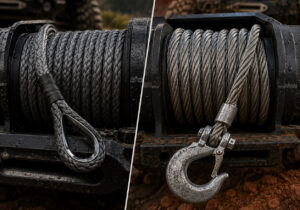
When you’re building out your Grenadier, Jeep, or other 4×4, a winch is one of those upgrades you may not use every weekend, but when you need it, you really need it. Choosing the winch itself is only part of the decision. You also need to decide whether synthetic rope or traditional steel cable makes the most sense for your vehicle and how you plan to use it.
There’s no single right answer. Synthetic line has become popular because it is lighter, easier to handle, and generally safer to work with during a recovery. Steel cable is still a solid choice, especially if durability, abrasion resistance, or occasional utility work are higher priorities.
A lot comes down to how you actually use your 4×4. Someone who spends a lot of time on technical trails may have different needs than someone who mainly uses their vehicle for overlanding, weekend exploring, or occasional recovery work. Weight, terrain, maintenance, cost, and how often you expect to use the winch all play a part.
Before deciding which one belongs on your rig, it helps to understand where each option performs well and where the tradeoffs are. Here’s a closer look at the pros and cons of synthetic and steel winch line.
PROS OF A SYNTHETIC LINE
- Well suited for frequent winching: Its lighter weight and easier handling make synthetic rope a practical option for users who operate their winch regularly.
- Lightweight: Synthetic rope is easier to manage and helps reduce the total weight of the winching system.
- Reduced stored energy: Synthetic rope retains less energy while under tension, which can lessen the severity of recoil if the rope fails.
- Free of sharp burrs: Unlike steel rope, synthetic rope does not form sharp metal splinters, making it safer and more comfortable to handle.
- Added abrasion protection: A movable protective sleeve helps guard the rope against friction, surface wear, and contact with rough objects.
- Protection from UV exposure and chemicals: A black urethane coating helps shield the rope from sunlight, chemicals, and other environmental elements.
CONS OF A SYNTHETIC LINE
- More susceptible to abrasion: Contact with sharp edges and rough surfaces can damage the rope, making routine inspection for cuts, fraying, and excessive wear essential.
- Dependent on proper sleeve use: The abrasion sleeve must be correctly positioned at contact points to help prevent premature rope damage.
- Sensitive to environmental exposure and use: Sunlight, chemicals, dirt, heat, and repeated use can shorten the rope’s service life without proper care and maintenance.
- Higher cost: Synthetic rope generally costs more than steel rope and may not be the preferred choice for users working within a limited budget.
PROS OF A STEEL LINE
- Exceptional durability: Steel rope offers excellent resistance to abrasion and is well suited for demanding recovery and utility applications.
- Broad range of uses: Steel rope can be used for vehicle recovery as well as utility work, including moving trees, rocks, and other heavy objects.
- Practical for occasional winching: Its durability and storage characteristics make steel rope a dependable choice for users who operate their winch infrequently.
- Resistant to UV degradation: Prolonged sunlight exposure does not weaken steel rope in the same manner as many synthetic materials.
- More economical: Steel rope is usually less expensive than synthetic rope, providing a cost-effective option for many winch owners.
CONS OF A STEEL LINE
- Greater weight: Steel rope adds considerably more weight to the winching system and can be more difficult to handle, spool, and transport.
- Can develop sharp burrs: Broken wire strands may create sharp edges that can cause injury, making heavy-duty gloves essential during handling.
- Increased stored energy: Steel rope holds more energy while under tension, creating a greater risk of dangerous recoil if the rope breaks or a recovery connection fails.
- Susceptible to corrosion: Exposure to moisture and environmental conditions can cause rust, requiring periodic inspection and maintenance.
Ultimately, the choice between synthetic and steel line should be based on the intended application, anticipated frequency of use, operating environment, maintenance expectations, and budget.